United States · Consumer Law · Class Action & Mass Tort · Civil Litigation
Google class action lawsuit: when can the Google class action settlement for Google Assistant pay you?
A federal judge approved Google's $68 million Assistant privacy settlement on October 13. The ordinary claim deadline has passed, and valid claimants still face payment conditions rather than a guaranteed arrival date.
- Written by
 Emily Chen
- Published
- Approval
- October 13, 2026
- Case
- In re Google Assistant Privacy Litigation, 5:19-cv-04286-BLF
- Claim deadline
- August 27, 2026, passed
At a glance
The practical result
- Court
- Northern District of California, Judge Beth Labson Freeman
- Outcome
- $68 million settlement approved; seven objections overruled
- Law
- Class-action settlement approval under Federal Rule 23
- Immediate effect
- Approval advances the deal; payment date is not guaranteed
In this article
- What the judge approved in the Google Assistant lawsuit
- Who qualifies for the Google Assistant privacy settlement?
- Can I still submit a Google Assistant claim?
- How much will my Google Assistant settlement payment be?
- What comes out of the $68 million fund?
- When will Google Assistant settlement payments arrive?
- How the Google Assistant settlement got here
- Which Google class action settlement are you waiting for?
- Is a Google Assistant settlement message a scam?
- What to verify about your filed claim
- Google settlement questions
Short answer: The Google class action lawsuit over Assistant recordings now has final settlement approval: Judge Beth Labson Freeman approved the $68 million deal on October 13, 2026. The ordinary claim deadline was August 27, so approval doesn't open a new claim window. For valid claimants, payment depends on the settlement becoming final and the administrator completing the payment process; there is no promised calendar payment date in the settlement terms.
What the judge approved in the Google Assistant lawsuit
Judge Freeman approved a settlement of disputed claims that Assistant recorded communications without intentional activation or disclosed recordings to outside review vendors. Her October 13 order in federal court in San Jose, California, approved the deal and overruled seven objections. The settlement covers qualifying people across the United States and its territories, not just Californians.
The alleged accidental activations are called false accepts: a device begins recording even though the user didn't deliberately activate Assistant, such as by saying a trigger phrase. Google denies wrongdoing, and the settlement notice says the court did not decide who was right about those allegations. Approval means the judge accepted the compromise as fair, reasonable and adequate under the class-action rules.
That distinction matters if you're trying to understand what the payment represents. It's compensation under an agreed resolution, not a trial verdict establishing what happened to every recording. The judge weighed the risks of continuing the lawsuit, including whether people bringing the privacy claims could win permission to pursue them as a group. Courthouse News reported the approval; a consumer lawyer can address a separate personal dispute about your privacy rights.
Who qualifies for the Google Assistant privacy settlement?
The settlement has two groups: qualifying purchasers of Google-made devices, and qualifying Assistant users or household members whose communications were recorded or disclosed. The covered period is May 18, 2016 through March 19, 2026, inclusive.
Under the notice's definition, a user is a person residing in the United States or its territories whose Google account was associated with an Assistant-enabled device during that period. A household member shares the user's home. Buying any Android phone, by itself, doesn't establish an Assistant purchaser claim.
| Group | What qualifies |
|---|---|
| Purchaser Settlement Class | A qualifying user who bought a Google-made, Assistant-enabled device in the United States or its territories during the covered period. |
| Privacy Settlement Class | An Assistant user or member of a user's household during the covered period whose communications were obtained through a false accept, or recorded or obtained by Assistant and disclosed to a third-party review vendor. |
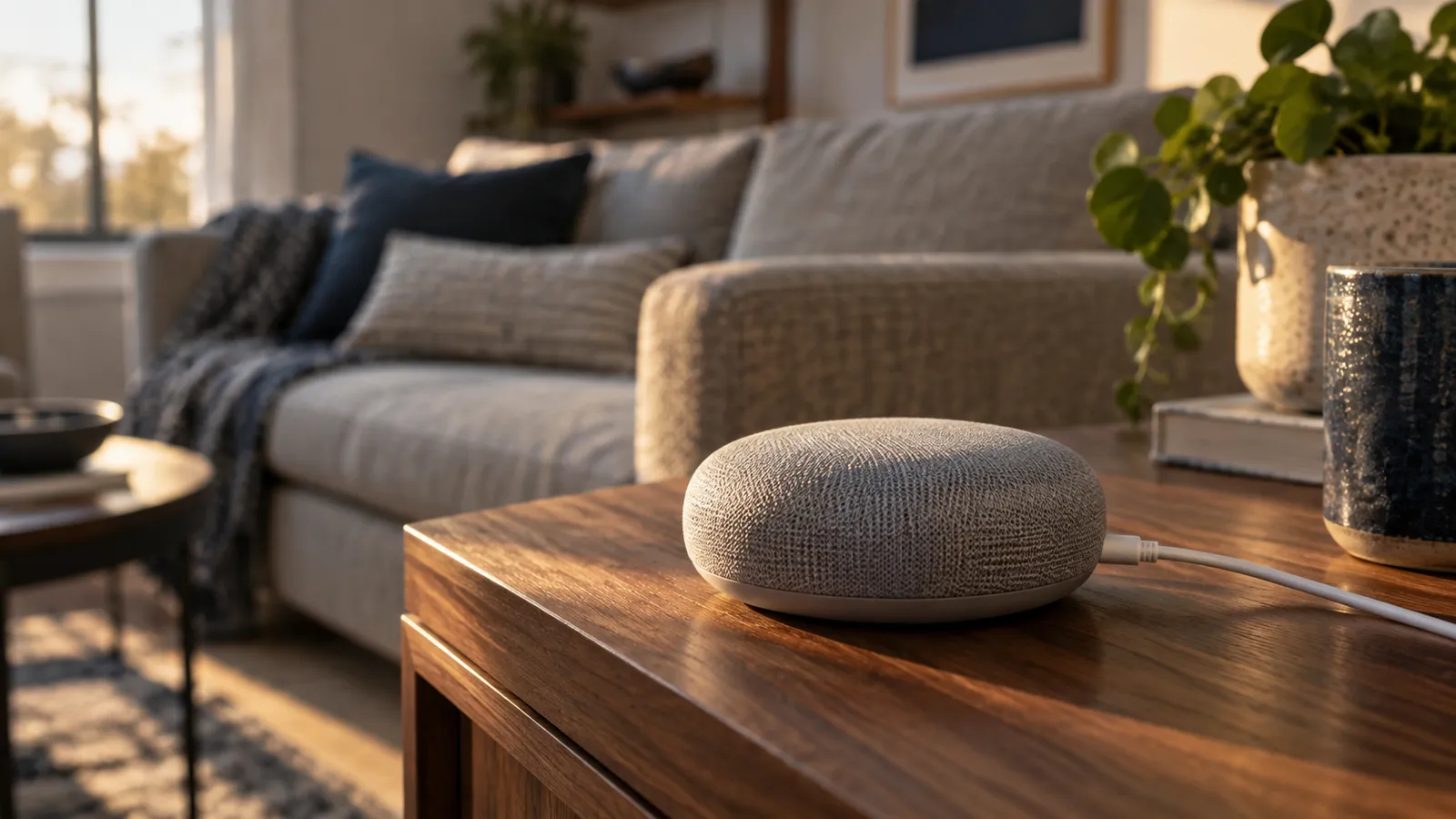
- Google-made smart speakers include Google Home, Home Mini and Home Max.
- Google-made smart displays include Nest Hub and Nest Hub Max.
- Pixel smartphones are also included in the notice's Google-made device examples.
Can I still submit a Google Assistant claim?
The ordinary claim deadline has passed. The official settlement website marks August 27, 2026 as closed for claims, exclusion requests and objections; the October 13 approval doesn't replace that date.
Late claims have a narrower, uncertain route. The administrator's September 17 declaration said it had discretion to accept late claims without materially delaying distribution, and anticipated processing them at least through one week after the October 1 hearing. That stated period is already past. The declaration doesn't establish a new deadline or a right to have a late claim accepted today.
Membership and payment are separate. A person who stays in the settlement can be bound by its release even without an accepted claim or a payment. People who previously opted out of the certified purchaser class remain excluded unless they rejoined; the notice also excludes certain people with individually released claims. A past law-firm arrangement should not be assumed to be a claim in this class settlement.
How much will my Google Assistant settlement payment be?
The administrator preliminarily estimated $8 to $20 per allocation point on September 17. That estimate assumes $40 million available for claimants and can change after validation or further deductions; it isn't a confirmed award.
The allocation plan assigns four points for each eligible device in an accepted purchaser claim, capped at three devices. An accepted privacy claim adds one point. The same person can qualify for both, up to 13 points, and the money available is divided proportionally across the valid points.
| Accepted claim | Allocation | Using the September 17 estimate |
|---|---|---|
| One eligible device, purchaser claim only | 4 points | $32 to $80, conditional estimate |
| Privacy claim only | 1 point | $8 to $20, conditional estimate |
| Both groups | Device points plus 1 privacy point, maximum 13 | Final amount depends on valid claims and available funds |
What comes out of the $68 million fund?
The headline $68 million fund also pays the costs the court approved. Freeman awarded attorneys $22,666,666.70, one-third of the fund, plus $1,021,738.40 in litigation expenses. She reduced the requested $10,000 service awards to $5,000 for each of the four class representatives. Notice and administration costs also come from the fund, so $68 million isn't the amount divided among ordinary claimants.
The order repeats earlier estimates of $18 to $56 for purchaser members and $2 to $10 for privacy members. Those estimates came from the preliminary-approval materials; the administrator's September 17 per-point estimate is later. Neither set of estimates fixes your eventual payment.
When will Google Assistant settlement payments arrive?
There is no guaranteed payment date. The October 13 order directs class counsel to submit a proposed judgment. The agreement requires a final judgment that has become final, together with its other conditions, before the settlement's effective date occurs. Appeals can delay finality.
The agreement's payment clause provides for payment within 60 calendar days after the effective date, or as soon as practicable thereafter. That clock does not simply start on October 13. A filed claim can also require additional information before the administrator accepts it.
How the Google Assistant settlement got here
The written approval on October 13 followed the October 1 fairness hearing. It is a separate event from the earlier preliminary approval and the claim deadline.
The original recording-related lawsuits were filed; related cases were later consolidated.
Preliminary approval set the end of the settlement's covered period.
The ordinary claim, exclusion and objection deadlines passed.
Judge Freeman held the settlement fairness hearing.
The court granted final approval, decided the fee request and overruled seven objections.
Which Google class action settlement are you waiting for?
Assistant, Android cellular data and Google Play are different settlements with different eligibility and payment procedures. The case name on your notice matters more than the word Google.
For example, Taylor's official FAQs describe attempts to pay eligible members automatically, with a payment-method election to help the money reach them. Assistant requires an accepted claim. Taylor received final approval on August 21, 2026, in a different court order; the Google Play antitrust settlement concerns app purchases. An Android cellular-data notice cannot establish that you filed an Assistant claim.
Even a successful court ruling can mean something different from a settlement approval. The Invisalign class-action ruling revived claims for further litigation; this Assistant order approves a negotiated deal. Neither result, by itself, is a notice that money has reached your account.
| Case or settlement | Issue | Why it is separate |
|---|---|---|
| Google Assistant Privacy Litigation, $68 million | Alleged accidental recordings and recording disclosures | Purchaser and privacy groups; ordinary claim deadline August 27, 2026. |
| Taylor v. Google LLC, $135 million | Alleged use of Android users' cellular data | Different class and payment process; excludes members of the separate Csupo case. |
| Google Play antitrust settlement, $700 million | App distribution and in-app payment practices | Concerns Google Play purchases, not Assistant recordings. |
Is a Google Assistant settlement message a scam?
A message's appearance alone can't establish whether it is genuine. The Assistant class settlement's administrator is A.B. Data, Ltd.; its official website lists 1-877-411-4704 and info@GoogleAssistantPrivacyLitigation.com. Those contact details let you ask about your claim independently of a link in an unexpected message.
The notice explains that genuine claim emails could contain a Unique ID and PIN. Those codes identify a settlement claim; they don't prove that every email containing numbers is legitimate. A message from a law firm about an individual release may concern a separate arbitration arrangement, which the class notice treats differently.
Additional-document requests can be legitimate too: the allocation plan lets the administrator seek information to resolve claim deficiencies. The safer distinction is who is asking and which claim they mean, rather than assuming every follow-up is fraudulent or every official-looking message is safe.
What to verify about your filed claim
Your case name, saved claim and current contact details are the useful checks while payment remains conditional. The notice makes you responsible for keeping the administrator informed when your mailing or email address changes.
Class counsel already represents the settlement groups; you don't need to hire a lawyer simply to receive an accepted claim's payment. For a personal question about an earlier opt-out or the claims you released, choosing a lawyer explains what to ask before hiring one. This is general legal information, not legal advice.
- Case identity: whether the notice names Google Assistant Privacy Litigation, Taylor, or another case.
- Claim record: whether you saved an Assistant submission confirmation and any subsequent request or decision.
- Contact details: whether A.B. Data has the mailing and email addresses associated with your filed claim.
- Payment update: whether the administrator has provided an actual amount or date rather than an estimate.
- Personal rights: whether a prior exclusion or individual release changes your position in this settlement.
Google settlement questions
Does Google have a lawsuit on them?
Yes. This case, Google Assistant Privacy Litigation, resulted in approval of a $68 million settlement on October 13, 2026. It concerns disputed recording and disclosure claims. Google denies wrongdoing; the settlement approval is not a trial verdict that Google broke the law.
Can you just join a class action lawsuit?
No, not merely because you want a payment. Each case defines its class and procedures. In the Assistant settlement, belonging to a qualifying group and having an accepted payment claim are separate requirements, and the ordinary August 27, 2026 claim deadline has passed.
How much money will I receive from the Taylor vs. Google LLC settlement?
Taylor's administrator says the exact individual payment is still unknown. Taylor is the separate $135 million Android cellular-data settlement, not the $68 million Assistant case. Its payment depends partly on how many class members are successfully paid. Assistant payout estimates do not apply to Taylor.
Who is eligible to claim money from the Android lawsuit settlement?
For Taylor, the class covers natural persons in the United States who used Android mobile devices to access the internet through cellular data networks from November 12, 2017 through August 21, 2026, the final-approval date. Members of the separate Csupo v. Google case are excluded, and other exclusions apply. Taylor's official FAQs explain its payment process; these are not Assistant eligibility rules.
Will the Google Assistant settlement pay automatically?
No. Assistant requires an accepted claim; class membership alone does not produce a payment. Taylor describes a different process with automatic-payment attempts. Final approval does not guarantee when an accepted Assistant claim will be paid; the settlement-finality and payment conditions still govern.
Need a lawyer?
Dealing with something like this?
Legal issues like this affect people and businesses differently. A lawyer can explain what it means for you, and we can help you find one.
Juricue is not a law firm and doesn't give legal advice. Contacting us doesn't create an attorney-client relationship.