United States · Consumer Law
How to stop robocalls: what will the new FCC rules change?
The FCC's updated opt-out rules take effect November 25. They let companies separate informational message categories, so stopping payment reminders may leave fraud alerts running.
- Written by
 Emily Chen
- Published
- Rule
- FCC 26-67, CG Docket No. 02-278
- Effective date
- November 25, 2026
At a glance
The practical result
- Agency
- Federal Communications Commission
- Change
- Category-specific informational opt-outs and disclosed opt-out methods
- Law
- Telephone Consumer Protection Act; 47 CFR 64.1200
- Today
- Rule published; amendments take effect November 25
In this article
- One opt-out can leave other informational alerts running
- A disclosed opt-out method can become the required route
- Ten business days remains the general ceiling
- How to stop spam texts from a suspected scammer
- Phone filters can quiet calls before they ring
- Carrier and home-phone options depend on your service
- What to verify after an ignored opt-out
- Questions about blocking calls and the Do Not Call Registry
- The dates that change the FCC rules
Short answer: Replying STOP won't necessarily end every informational message from the same company under the FCC's new rule published October 26, which takes effect November 25, 2026. Companies will be allowed to treat an opt-out as covering the specific category of informational calls or texts that prompted it, while existing telemarketing opt-out protections remain. That makes the message's purpose and opt-out instructions worth checking; phone filters serve a different purpose, quieting scammers who ignore the law.

One opt-out can leave other informational alerts running
The FCC's order allows a sender to limit an opt-out to the category of informational robocalls that triggered it. Informational messages don't advertise or try to sell something. The change can preserve alerts you want, but it also means a customer who wants all consent-based informational messages stopped may need more than one request.
Suppose your bank sends automated payment reminders and fraud alerts. From November 25, opting out of the reminders could leave the fraud alerts running.
The agency says the earlier all-or-nothing approach risked cutting off wanted, time-sensitive messages. Its order also acknowledges that some consumers may have to make multiple requests. Preserving useful alerts is a sensible goal; the cost is that a successful opt-out may be narrower than you expect.
Sales pitches remain different. A request withdrawing consent to advertising or telemarketing robocalls covers future advertising or telemarketing robocalls from that caller. Crowell & Moring's analysis emphasizes that the category change concerns informational messages. It doesn't give a seller permission to keep sending automated promotions after a valid withdrawal. Persistent unwanted contact is the kind of issue a consumer lawyer can assess against your consent history.
A disclosed opt-out method can become the required route
The amended rule lets callers designate one or more specified methods as the exclusive route for withdrawing consent, with a clear, conspicuous disclosure in the call or text. When that designation is valid, they won't have to process requests sent another way. Without a designation, the requirement to accept any reasonable method continues.
For a customer, the practical difference is the channel. A complaint sent somewhere other than the disclosed opt-out route may no longer do the same job. The permitted routes are limited to the methods in the rule; a company cannot invent an unduly difficult process and call it exclusive.
A sender using reply texts can disclose just one recognized word, such as STOP, but must honor all seven standardized replies. A customer who replies CANCEL rather than STOP still expresses a recognized withdrawal of consent.
Existing required opt-out methods for advertising, telemarketing and exempt calls remain in place. The FCC specifically preserves those obligations, so the exclusive-method change shouldn't be read as wiping out their protections.
| Method or reply | What the FCC permits or requires |
|---|---|
| Automated voice or key press | A disclosed automated opt-out in response to the call. |
| Reply text | Standardized replies: stop / quit / end / revoke / opt out / cancel / unsubscribe. |
| Caller-provided website or telephone number | A disclosed route for processing opt-out requests. |
| No exclusive designation | Requests made in any reasonable manner must still be processed. |
Ten business days remains the general ceiling
The general rule still requires callers to honor consent-withdrawal requests within a reasonable time, no longer than ten business days after receipt. Seven business days is being discussed in the separate proposal; it isn't the new deadline. A ceiling also isn't permission to delay every request until the last day.
Some exempt calls have stricter requirements. Financial institutions using the limited exemption for certain fraud-related and similar messages must honor opt-outs immediately. The final rule expands where those institutions may obtain a reliable customer number, rather than removing their opt-out duty.
This is a narrow change for specified informational communications, not a general license to make bank marketing calls. The difference matters if an unfamiliar bank alert arrives on a number you don't remember supplying directly. For this exemption, the bank may use a number:
- Supplied by a spouse or family member authorized to be on the account.
- Obtained when the customer calls the bank.
- Included in records obtained from another financial institution.
How to stop spam texts from a suspected scammer
Phone filters and reporting are more useful for suspected scam texts than expecting the sender to respect an opt-out. A legitimate company's disclosed STOP process and an unexpected message asking for account details deserve different responses.
The FTC's text-message guidance recommends contacting a company through a number or website you already know is real when a message might be genuine. A familiar company name doesn't authenticate a link.
For suspicious texts, the FTC identifies these reporting options. None requires opening the sender's link.
- Forward a copy to 7726, which spells SPAM, for your wireless provider.
- Use the messaging app’s report-junk or report-spam option.
- Report the message to the FTC at ReportFraud.ftc.gov.
Phone filters can quiet calls before they ring
Filtering can reduce interruptions even when a caller ignores an opt-out. The trade-off is access: an unfamiliar number can also belong to someone you need to hear from. A warning label lets you decide whether to answer; blocking is more aggressive.
On supported iPhones, Apple's call controls are in Settings, then Apps, then Phone. Under Screen Unknown Callers, Ask Reason for Calling asks unsaved callers why they're calling before your phone rings. Silence sends them to voicemail. Available controls depend on your software and service. If you're waiting for an unfamiliar caller, silencing every unsaved number may be too blunt.
On phones using Google's Phone app, Caller ID and spam settings include See caller ID & spam and, where available, Filter spam calls. Devices with automatic Call Screen use a different spam-blocking option. Filtered calls remain in call history, but missed-call and voicemail notifications aren't shown. Android menus vary, so those labels aren't a promise about every manufacturer's phone.
Google also says caller-ID and spam protection may send call information to Google, including numbers outside your contacts. That privacy choice belongs alongside the convenience of fewer interruptions. A filter's label is a reason for caution, not proof that a caller is safe or fraudulent.
Carrier and home-phone options depend on your service
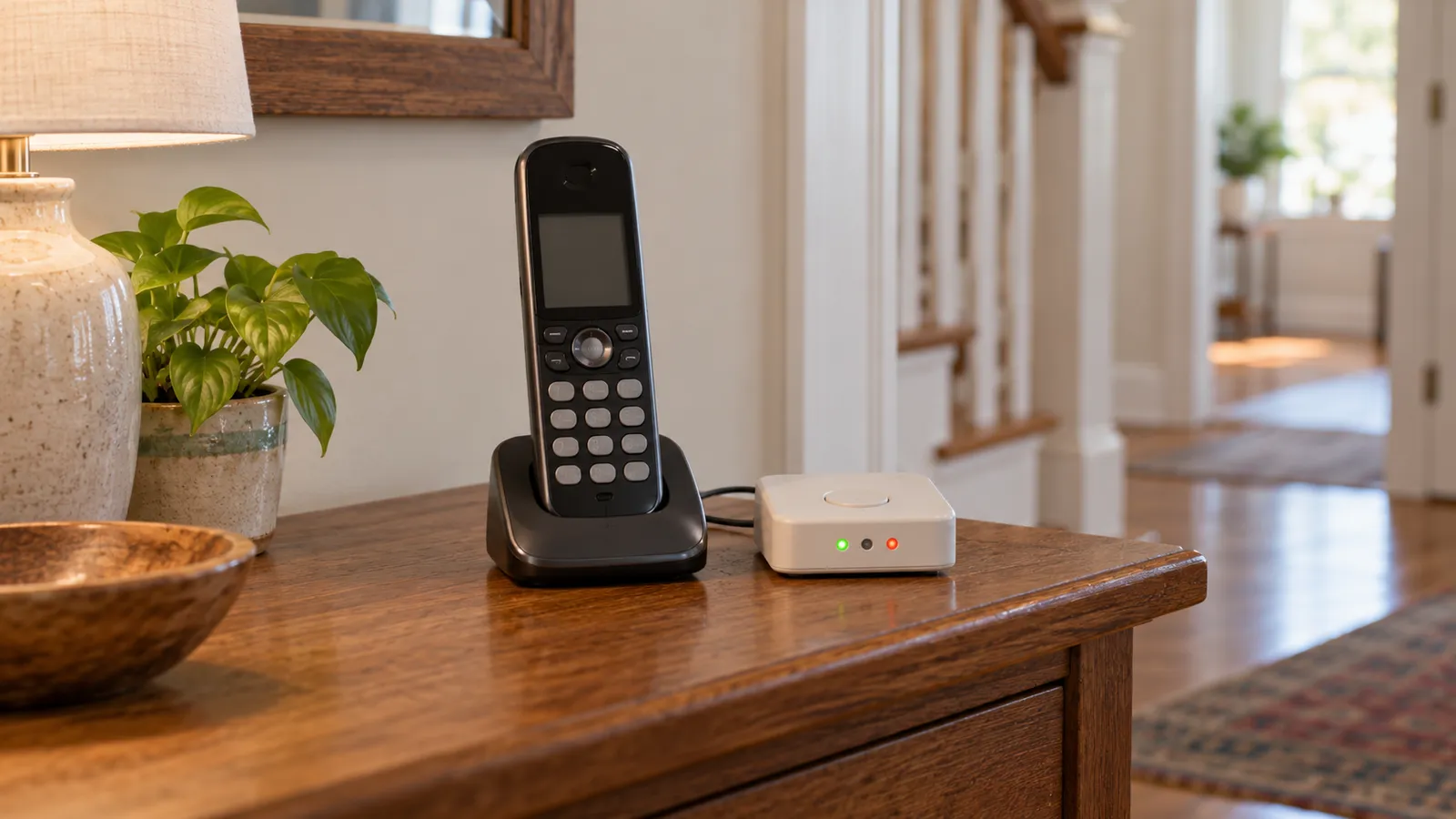
Your provider may offer filtering before calls reach the handset. The FTC distinguishes internet home-phone services from traditional landlines: an internet-based service may support provider or online call blocking, while a traditional line can use a separate blocking device. Matching the tool to the connection avoids buying something your line can't use.
For mobile service, a carrier's own controls can complement the phone's settings. Some services charge, so a familiar name doesn't mean every feature is included. Check which blocking tools your carrier offers; T-Mobile's activation code, for example, applies to T-Mobile devices.
Scammers can also fake a nearby number or a legitimate business name. Blocking one displayed number won't establish who placed the call. The FTC advises hanging up on illegal robocalls without pressing a button to be removed, since engaging can bring more calls.
What to verify after an ignored opt-out
The useful record is what you asked to stop, how you asked and what arrived afterward. Those details help distinguish another informational category from the same unwanted messages continuing. General information can't decide whether a particular caller violated the law.
When choosing a lawyer, experience with unwanted calls and consent disputes is more relevant than a promise that every spam call earns compensation. If you want help finding someone who handles the issue in your state, you can request a connection through Juricue.
When the same sender contacts many people in similar circumstances, a lawyer who handles class actions can assess whether a group claim is possible. Receiving an unwanted call alone doesn't establish a right to compensation.
- The sender and purpose: informational alert, sales pitch or suspected impersonation.
- The opt-out wording and route disclosed in the message, plus your request and its date.
- The later messages, including dates and whether their category changed.
- The line involved and any existing consent or account preferences relevant to it.
Questions about blocking calls and the Do Not Call Registry
The Do Not Call Registry targets sales calls from companies that follow the law; it doesn't block every unwanted call. The FTC explains that callers can obtain numbers through random dialing or purchased information, so an unexpected call alone doesn't reveal how they found you.
Does the Do Not Call Registry work?
Yes, for reducing sales calls from companies that follow the law. It doesn't physically block calls or stop illegal scammers. The FTC says registration is free and sales calls can take up to 31 days to stop. Informational calls are among the categories the registry doesn't bar simply because a number is listed.
Is there a Do Not Call list for cell phones?
Yes. Personal cell and home numbers use the same National Do Not Call Registry at DoNotCall.gov. It isn't a separate cell-phone list, and registration doesn't expire unless the number is disconnected and reassigned or you request removal. Business numbers aren't covered.
Does 662 really work?
Yes, #662# is a T-Mobile Scam Block activation method when dialed from a T-Mobile device. It's a carrier feature, not a universal code that blocks every unwanted call on every network. Ordinary 662 without the hash symbols isn't the published code.
How do spam callers get my number?
Random dialing is one route; information sold by companies is another. The FTC describes both. A sudden influx doesn't by itself prove your phone was hacked, and a local-looking caller ID doesn't prove the caller is nearby.
Does ignoring robocalls make them stop?
Ignoring a ring doesn't send a consent-withdrawal request to a legitimate company. For illegal callers, silence isn't a guarantee they'll stop dialing. The FTC recommends blocking unwanted calls and hanging up on illegal robocalls rather than pressing buttons or calling back.
The dates that change the FCC rules
November 25 is both the effective date for the final amendments and the deadline for comments on further changes. The companion proposal sets December 28, 2026, for reply comments. Those are separate steps: a proposed improvement doesn't become a consumer right just because the final amendments take effect.
The unresolved issue is a one-step way to withdraw consent across all informational categories. The FCC is asking whether callers should have to offer it. Until that question is resolved, the new category-by-category approach can preserve a wanted alert while leaving a customer who wants complete silence with several opt-outs to make.
FCC adopts the order and further notice of proposed rulemaking.
FCC releases the full order.
Final amendments and companion proposal are published in the Federal Register.
Final amendments take effect; comments on the companion proposal are due.
Reply comments on the proposal are due.
Need a lawyer?
Dealing with something like this?
Legal issues like this affect people and businesses differently. A lawyer can explain what it means for you, and we can help you find one.
Juricue is not a law firm and doesn't give legal advice. Contacting us doesn't create an attorney-client relationship.