United States · Immigration Law · International Law · Transportation & Aviation
Do Ebola travel restrictions amount to an Ebola travel ban? Do you need a CDC form?
You need a CDC travel statement to board an international flight to or through the United States. The rule is not a blanket Ebola travel ban, but recent travel in the Democratic Republic of the Congo can stop a person from boarding.
- Written by
 Emily Chen
- Published
- Effective date
- November 3, 2026, at 11:59 p.m. EST
- Travel history
- You have not been in the DRC during the 21 days before boarding
At a glance
The practical result
- Agency
- Centers for Disease Control and Prevention
- What changed
- All U.S.-bound international air travelers must complete a statement
- Authority
- CDC amended order, 91 FR 68518
- Immediate effect
- You cannot board without the completed statement unless you have a government exemption
In this article
- The 21-day rule is about recent DRC travel
- A connection through the DRC still counts
- The October 11 entry-suspension continuation also covers the DRC
- Your airline will collect the required statement before boarding
- How the Ebola travel restrictions developed
- What to verify before you travel
- Ebola travel restrictions FAQs
Short answer: Everyone boarding an international flight to or through the United States must complete a CDC travel statement. The statement asks whether you have been in the Democratic Republic of the Congo during the previous 21 days. These are U.S. rules, not rules for Canada or every other country. They do not stop all international travel, but a person who has recently been in the DRC cannot board a U.S.-bound flight unless the U.S. government grants an exemption.

The 21-day rule is about recent DRC travel
Everyone on an international flight to the United States must complete the statement. It asks whether you were in the DRC during the previous 21 days. That includes U.S. citizens, U.S. nationals, green-card holders, crew, and people connecting through the United States.
If you were in the DRC during those 21 days, you cannot board a U.S.-bound flight unless you have a government exemption. CDC counts the day you leave as Day 0, the first full day outside the country as Day 1, and says U.S.-bound travel may begin on Day 22. That calendar-day detail matters if your departure falls near the end of the waiting period.
CDC grants exemptions only in unusual cases, such as authorized medical transport or a humanitarian need. The Federal Register notice says the rule is scheduled to stay in effect through December 18 unless the government changes or ends it earlier.
| Your situation before a U.S.-bound flight | What the CDC guidance says |
|---|---|
| You were not in the DRC during the prior 21 days | Complete the required statement for your flight. |
| You were in the DRC during the prior 21 days | You cannot board unless the U.S. government has issued an exemption. |
| You only connect through the United States | You still need to complete the travel statement. |
| You cross a land border or arrive by sea | The air-travel statement is not required for a land or sea crossing. That does not decide whether the separate entry-suspension order applies to a covered noncitizen recently in the DRC, Uganda, or South Sudan. |
A connection through the DRC still counts
Yes. A stop or connection in the DRC counts as being present there, even if you do not leave the airport or the airplane. That is why an itinerary, not just a final destination, matters when you answer the 21-day question.
If you are only connecting through the United States on your way to another country, you still need to complete the statement before the flight that enters the United States. CDC's traveler guidance says this rule is meant to reduce the risk of Ebola entering through air travel, while also noting that the overall risk to the American public and travelers remains low.
The October 11 entry-suspension continuation also covers the DRC
The new form does not replace the separate entry-suspension order. The Federal Register order for the October 11 continuation covers certain non-U.S. citizens and non-U.S. nationals who had been in the DRC, Uganda, or South Sudan during the prior 21 days. It says the continuation remains in effect through 4:59 p.m. Eastern on November 10, 2026. That is a different order from the air-travel statement, which is scheduled to run through December 18 unless changed or ended sooner.
The May 18 order had excepted lawful permanent residents; the May 22 amendment removed that exception. The October continuation includes lawful permanent residents among the covered people, subject to its listed exceptions. It is an order about entry into the United States, not a requirement limited to air travelers. So the fact that the statement is not required at a land or sea crossing does not itself mean a covered noncitizen recently in one of the three countries may enter that way. Under CDC's current traveler guidance, U.S. citizens and U.S. nationals who have been in Uganda or South Sudan, but not the DRC, within 21 days before arrival in the United States will have their air travel routed through designated U.S. airports for public-health entry screening. Check CDC's separate entry-suspension order for a later continuation before relying on those restrictions after 4:59 p.m. Eastern on November 10. If this affects your travel plans or immigration status, an immigration lawyer can explain how the rules apply to you.
Your airline will collect the required statement before boarding
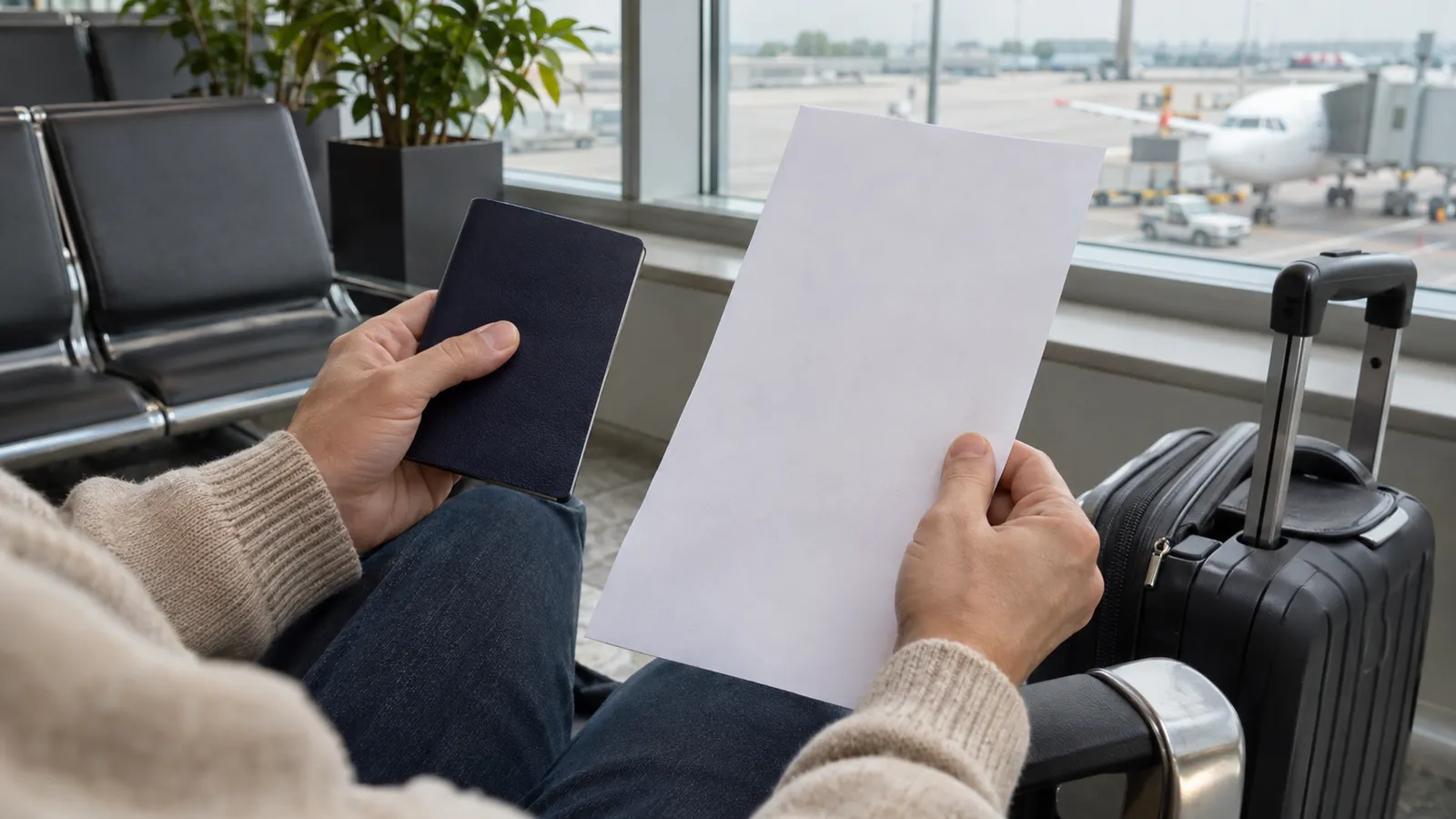
You may not need to print CDC's fillable PDF. Your airline must collect the statement before boarding. It may use paper or an online form, so ask your carrier how it will collect the statement for your flight.
Without a completed statement, the airline cannot let you board unless you have a U.S. government exemption. It must also keep the completed record for at least 42 days. The requirement took effect on November 3.
How the Ebola travel restrictions developed
CDC issued its [initial entry-suspension order](source:entry-order-initial) for certain non-U.S. citizens and non-U.S. nationals recently in the DRC, Uganda, or South Sudan. The order excepted lawful permanent residents.
CDC [amended the entry-suspension order](source:entry-order-amendment). The amendment included lawful permanent residents among the covered people, subject to the order's listed exceptions.
CDC issued its last posted continuation of the separate entry-suspension order for DRC, Uganda, and South Sudan. The Federal Register order sets the end at 4:59 p.m. Eastern on November 10.
CDC issued the initial air-travel attestation order.
CDC clarified that the requirement covers everyone on the flight, including crew, not only passengers.
The updated travel-statement requirement took effect at 11:59 p.m. EST for flights departing for the United States from a foreign country.
The Federal Register order's stated end time for the October 11 continuation arrives at 4:59 p.m. Eastern, unless it is amended, rescinded, or followed by another continuation.
Scheduled end of the amended order unless it is amended, extended, or rescinded sooner.
What to verify before you travel
Which rule applies to you depends on where you traveled, when you left, your citizenship or nationality, and your flight connections.
If you were in the DRC during the previous 21 days, you cannot board a U.S.-bound flight unless you have an exemption. For recent travel in the DRC, Uganda, or South Sudan, check whether CDC has posted a continuation of its separate entry-suspension order. The Federal Register order says the October 11 continuation ends at 4:59 p.m. Eastern on November 10.
If you feel sick after a possible exposure, travel paperwork is not the next concern. CDC lists fever, aches, weakness, and other symptoms that can have many causes. Seek medical care promptly and tell the provider about possible exposure and travel history; get emergency help right away for a serious illness.
If an entry problem could disrupt your return, talk with an immigration lawyer about your specific travel history and status.
- Calendar days since you left the DRC, if you were there or transited through it.
- Every connection, including an airport stop where you stayed on the aircraft.
- How the airline will collect the required statement for your flight.
- Whether CDC has continued the separate entry-suspension order for the DRC, Uganda, or South Sudan after 4:59 p.m. Eastern on November 10.
Ebola travel restrictions FAQs
If you are worried about possible Ebola exposure or symptoms, travel rules cannot tell you whether you are sick. CDC's symptoms guidance and explanation of how Ebola spreads are the right starting points for health concerns, while an airline and, where needed, a lawyer can address travel or entry questions.
Do I have to fill out the Ebola form to fly to the U.S. if I have never been to Congo?
Yes. The CDC order applies to every person boarding an international flight to or connecting through the United States from a foreign country. The statement asks whether you have been in the DRC during the preceding 21 days.
Can I travel to Uganda right now?
This order does not decide Uganda's own entry rules. For entry into the United States, the Federal Register order for the October 11 continuation covers certain non-U.S. citizens and non-U.S. nationals recently in the DRC, Uganda, or South Sudan, and says it remains in effect through 4:59 p.m. Eastern on November 10. Its entry restriction is separate from the flight-only statement requirement. Under CDC's current traveler guidance, a U.S. citizen or national who has been in Uganda but not the DRC within 21 days before arrival in the United States will have their air travel routed through a designated U.S. airport for public-health entry screening. Check CDC for a later continuation before you travel.
Is Ebola still a thing in 2026?
CDC's air-travel statement requirement applies through December 18, 2026, unless it changes sooner. The Federal Register order for the separate October 11 continuation of the entry-suspension order says it ends at 4:59 p.m. Eastern on November 10, so check for a later continuation before relying on that separate rule.
What are the symptoms of Ebola virus infection?
CDC lists fever, aches, weakness, and other possible early symptoms. Symptoms can have many causes, so a person who is sick or thinks they may have been exposed should seek medical care promptly and follow local emergency guidance.
What precautions should I take to protect myself from getting Ebola?
CDC says Ebola spreads through direct contact with body fluids from a person who is sick with Ebola or has died from it, not through casual contact. Follow current public-health guidance for your location and seek medical care promptly after a possible exposure or serious illness.
Need a lawyer?
Dealing with something like this?
Legal issues like this affect people and businesses differently. A lawyer can explain what it means for you, and we can help you find one.
Juricue is not a law firm and doesn't give legal advice. Contacting us doesn't create an attorney-client relationship.