California · Appeals · Civil Litigation
Why California gun dealers must keep surveillance systems after the Ninth Circuit ruling
If you run a licensed gun store in California, you still have to record video and indoor audio around the clock. A federal appeals court upheld the dismissal of the lawsuit against the law, but a specific search can still be challenged.
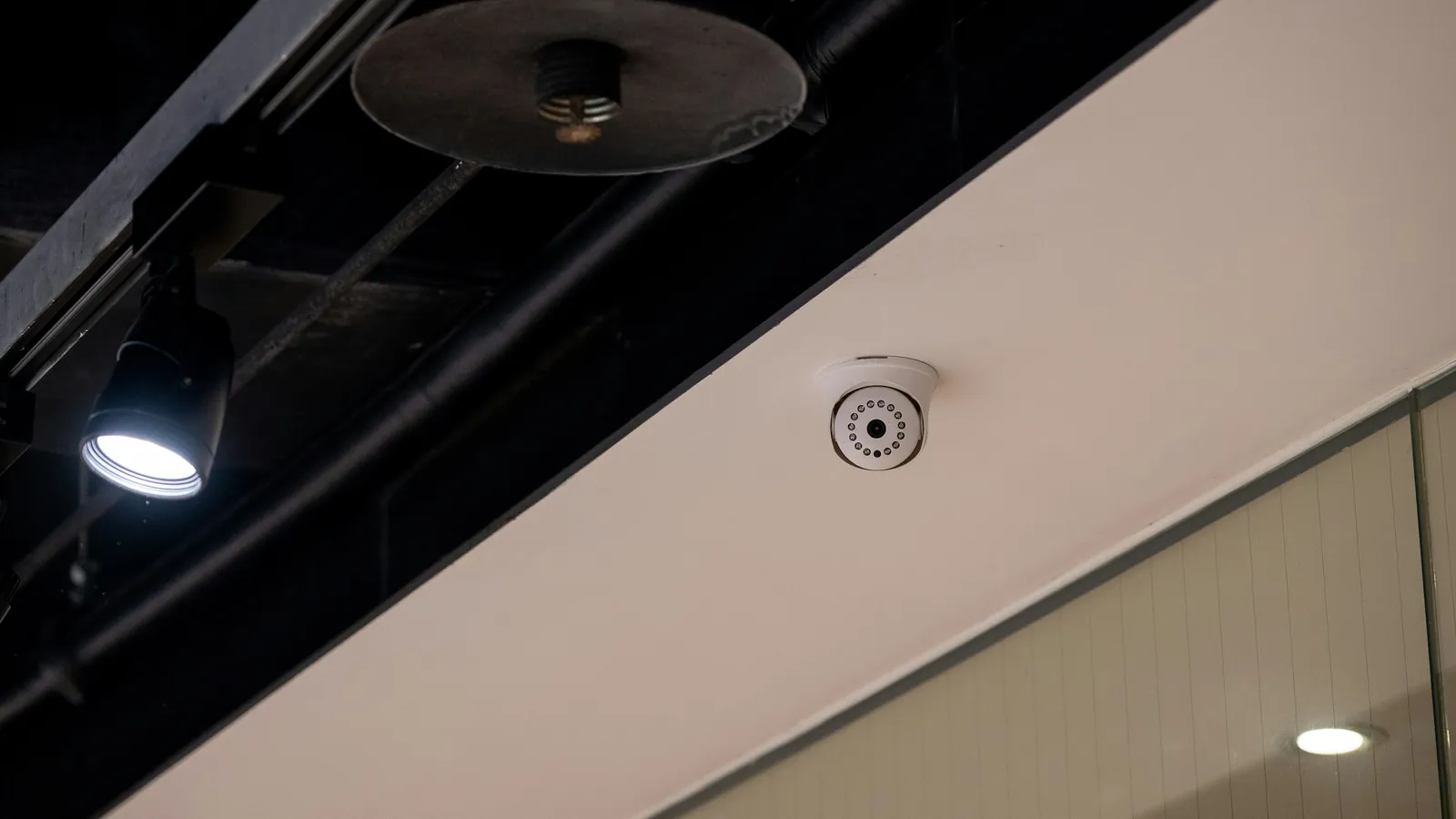
At a glance
The practical result
- Court
- Ninth Circuit, 2-1
- Outcome
- Dismissal affirmed
- Law
- Cal. Penal Code § 26806
- Immediate effect
- Recording duties remain in force
In this article
- What the Ninth Circuit decided
- Why California passed the law
- How the case got here
- What California requires from firearm dealers
- Why dealers challenged the rules
- How the court analyzed the challenge
- How the panel ruled on each claim
- What changes now, and what does not
- Is this the final word?
- What affected dealers should verify next
- Your questions about California's gun dealer surveillance law
Short answer: California firearm dealers covered by Penal Code section 26806 must keep operating the surveillance systems the law requires. In Richards v. Newsom, a divided Ninth Circuit panel affirmed the dismissal of claims that the law violated the First, Fourth, and Fifth Amendments. The ruling did not decide that every future inspection or use of a recording will be lawful.
What the Ninth Circuit decided
On August 27, 2026, the Ninth Circuit affirmed an order by U.S. District Judge James V. Selna of the Central District of California dismissing the plaintiffs' first amended complaint for failure to state a claim. The panel consisted of Judges Kenneth K. Lee, Lucy H. Koh, and Ana de Alba. Judge Koh wrote the majority opinion, joined by Judge de Alba. Judge Lee dissented in part.
The plaintiffs included federally licensed firearm dealers operating from storefronts and homes, gun-rights organizations, and private citizens. They asked the courts to declare section 26806 unconstitutional and stop its enforcement. The operative complaint focused on the First Amendment, Fourth Amendment, and Fifth Amendment.
How the case reached the court matters. The court reviewed the dismissal de novo, meaning it decided for itself whether the allegations in the complaint stated legally sufficient constitutional claims. It did not conduct a trial about a particular inspection, a particular disclosure of recordings, or a completed government search. If you are facing an appeal yourself, you can find appeals lawyers on Juricue.
Why California passed the law
The Legislature adopted section 26806 in Senate Bill 1384, which Governor Newsom signed on September 30, 2022. According to the opinion, lawmakers aimed at gun theft from licensed dealers and at straw purchases, where one person buys a firearm for someone who cannot or will not buy it directly. The figures come from ATF data and legislative committee reports cited in the opinion.
- 34,339
- firearms stolen from licensed dealers nationwide, 2017 to 2021
- About 80%
- of those thefts were burglaries, often outside business hours
- 7th
- California's gun-theft rate among states, 2012 to 2019
How the case got here
Governor Newsom signs SB 1384, which adds section 26806.
Dealers, gun-rights groups, and residents sue, raising five constitutional claims, and seek a preliminary injunction that the district court later denies.
The surveillance requirements take effect.
The amended complaint narrows the case to First, Fourth, and Fifth Amendment claims.
The district court dismisses all three claims.
Final judgment is entered after the plaintiffs decline to amend.
The Ninth Circuit affirms, 2-1.
Extended deadline for the Second Amendment Foundation to seek rehearing.
What California requires from firearm dealers
Section 26806 has applied since January 1, 2024. It requires a licensee's business premises to be monitored by a digital video surveillance system and sets technical, placement, storage, access, notice, and certification rules.
The one-year retention rule means a year of continuous video, plus indoor audio, from every covered camera has to be stored securely and remain available when a valid request arrives.
| Requirement | What section 26806 says |
|---|---|
| Start date | Applies from January 1, 2024. |
| Camera coverage | Interior views of all entrances and exits, all firearm display areas, and all points of sale, clear enough to identify people. |
| Recording | Continuous, 24 hours a day, at no less than 15 frames per second, with audio for systems inside the premises. |
| Retention and security | Recordings kept for at least one year, with an accurate date and time, secured against tampering, unauthorized access, and theft. |
| Failure alerts | The system must send an alert if it stops working. |
| Entrance notice | A conspicuous sign that the premises are under video and audio surveillance. |
| Inspection access | Inspectors may check the system during routine inspections that do not normally need a warrant or court order. |
| Release of recordings | Under a search warrant or court order, and for an insurance claim or civil discovery. |
| Certification | Annual certification to the California Department of Justice that the system works. |
Why dealers challenged the rules
The plaintiffs argued that mandatory, continuous recording intruded on privacy and property, chilled conversations and association, and forced private dealers to collect information for the state. They described the system as a "government eavesdropping device," especially where a dealer's licensed premises are part of a home.
Those arguments were organized around three constitutional theories. The Fourth Amendment claim treated recording itself as a search. The Fifth Amendment claim treated the equipment and recordings as a physical or regulatory taking. The First Amendment claim asserted overbreadth, loss of anonymity, compelled disclosure of association, and a chilling effect on speech.
These are constitutional litigation theories, not ordinary equipment-compliance questions. If you face an active lawsuit or enforcement dispute, you may need counsel with civil litigation experience, because the available claim and remedy depend on the facts and procedural stage.
How the court analyzed the challenge
Fourth Amendment. The majority rejected the theory that a search happens as soon as the dealer's system records data. It emphasized that the complaint did not allege a physical intrusion by the state or actual government access to the recordings, and it held that complying with the law did not turn private dealers into state actors (people acting on the government's behalf).
The majority separately addressed the dissent's concern about inspections. It said section 26806 does not authorize compliance inspections at all, because that authority comes from other laws the plaintiffs did not challenge. It added that even if the statute did authorize inspections, it would be valid on its face under New York v. Burger, and that the home-based dealers lacked standing (the legal right to bring the claim) to challenge hypothetical future searches. The opinion expressly stated that a dealer may still challenge the reasonableness of a specific search in the future.
Fifth Amendment. The majority found no physical taking because the government did not take possession of or acquire an interest in the equipment or recordings. It also rejected the regulatory-taking theory under the Penn Central factors, concluding that the pleaded allegations did not show the required economic impact, interference with reasonable investment-backed expectations, or a government action equivalent to a physical invasion.
First Amendment. The majority held that the complaint did not plausibly show that section 26806 regulated speech or conduct necessarily connected to speech. It found no required disclosure of names, no forced disclosure of organizational membership, and no concrete retaliation or adverse government action supporting the chilling theory.
How the panel ruled on each claim
| Claim | Majority (Koh, de Alba) | Partial dissent (Lee) |
|---|---|---|
| First Amendment | Rejected: no regulation of speech, no forced disclosure, no concrete chill. | Would find a violation: continuous audio burdens the right to receive and exchange information. |
| Fourth Amendment | Rejected: recording is not a government search, and dealers are not state actors. | Would find a violation, citing inspection discretion for home-based dealers. |
| Fifth Amendment | Rejected: no physical taking, and the Penn Central factors fail. | Not addressed. |
What changes now, and what does not
The immediate legal effect is narrow but important: the lawsuit did not stop the state requirement. The decision also does not replace the code text, agency rules, license conditions, or any nonconflicting local government requirement, so verify the rules that apply to your own premises rather than treating the opinion as a complete compliance manual. Attorney General Bonta's office announced the win on August 28 and said it will keep defending California's gun safety laws. The decision was one of four federal court rulings in late August 2026 that tested how far the government can go.
| Question | After the ruling |
|---|---|
| Must covered dealers keep recording? | Yes. Section 26806 remains in force. |
| Were the pleaded constitutional claims successful? | No. The Ninth Circuit affirmed dismissal. |
| Did the court approve every future inspection? | No. A specific search may still be challenged on its facts. |
| Did the court eliminate local rules? | No. Nonconflicting local surveillance requirements may still apply. |
| Is the dissent controlling law? | No. It records Judge Lee's disagreement with the majority. |
Is this the final word?
Possibly not. California Rifle & Pistol Association president Chuck Michel told Courthouse News that the plaintiffs will seek review by the full Ninth Circuit, and by the Supreme Court if necessary. On September 8, 2026, the Ninth Circuit extended the Second Amendment Foundation's deadline to petition for rehearing or rehearing en banc to October 13, 2026. Until a court rules otherwise, section 26806 stays in force.
What affected dealers should verify next
If you run a licensed gun store in California, start with these five checks. The law may ask more of you, so read the full code too, and a business and corporate lawyer can help you set up the day-to-day compliance side of your store. Our guide to finding a good lawyer lists questions to ask before you hire someone for a compliance or constitutional dispute, and you can compare lawyers across California on Juricue.
- Coverage: confirm that every required entrance, exit, firearm display area, and point of sale is visible and produces usable identification.
- Audio and continuity: check indoor audio, continuous 24-hour recording, frame rate, date and time display, and failure alerts.
- Retention and security: confirm that recordings remain available for at least one year and that storage is protected against tampering, unauthorized access, and theft.
- Notice and certification: review entrance signage and the annual certification submitted to the California Department of Justice.
- Access requests: set a process for inspections, warrants, court orders, civil discovery, and insurance requests so staff do not disclose recordings outside the statute's permitted paths.
Your questions about California's gun dealer surveillance law
Did the Ninth Circuit strike down section 26806?
No. The court affirmed dismissal of the plaintiffs' First, Fourth, and Fifth Amendment claims, so the statute remains in force. The plaintiffs have said they will seek further review.
Is this a new California gun law?
No. Section 26806 comes from Senate Bill 1384, which Governor Newsom signed on September 30, 2022, and it has applied since January 1, 2024. The Ninth Circuit ruling leaves it in place.
Does the law require both video and audio?
It requires clear images throughout the covered areas and audio for systems located inside the premises. The official statute contains the full placement and technical requirements.
How long must dealers keep recordings?
Section 26806 requires recordings to be maintained for a minimum of one year.
Can a dealer still challenge a specific inspection?
Potentially. The majority said its decision does not prevent a dealer from challenging the reasonableness of a specific future search. Whether a claim is available depends on the actual facts.
Need a lawyer?
Dealing with something like this?
A ruling like this affects people and businesses differently. A lawyer can explain what it means for you, and we can help you find one in California.
Juricue is not a law firm and doesn't give legal advice. Contacting us doesn't create an attorney-client relationship.