Texas · Environmental Law · Real Estate Law · Government & Municipal Law · Appeals
Is the Big Bend border wall, or Big Bend wall construction, back after the Supreme Court ruling?
The Supreme Court stayed the injunction in this case, but it did not finally decide whether the government's waivers or the project are lawful. That removes Judge Kathleen Cardone's injunction while the stay operates; it does not decide other Big Bend cases or identify what work may proceed at a particular place.
- Written by
 Emily Chen
- Published
- Supreme Court order
- November 9, 2026, No. 26A560
- Case
- Mullin v. Friends of the Ruidosa Church
- Lower-court case
- W.D. Texas No. 3:26-cv-01099
At a glance
The practical result
- Court
- U.S. Supreme Court, 8-1
- Outcome
- District-court injunction stayed
- Law
- IIRIRA Section 102 border-construction waiver
- Immediate effect
- Judge Cardone's injunction is stayed in this case
In this article
- The Cardone injunction is stayed, but the case is not over
- The district court still has merits motions to decide
- Where Big Bend is, and what infrastructure the record describes
- Why the Big Bend project is in court
- Who funds the money for the wall?
- How the Big Bend border-wall case got here
- What nearby readers should verify next
- Big Bend border wall FAQs
- The next order will matter more than the headline
Short answer: On November 9, the Supreme Court stayed Judge Kathleen Cardone's injunction in this case, so that injunction no longer stops the government while the stay remains in effect. The 8-1 order is not a final decision that the Big Bend border wall is lawful, does not decide the other Big Bend cases, and the public district-court docket shows that the parties' cross-motions for summary judgment and a motion to compel remain before Judge Cardone.
The Cardone injunction is stayed, but the case is not over
The Supreme Court's November 9 order stays the injunction Judge Kathleen Cardone entered in Friends of the Ruidosa Church. It is a pause of that lower-court order while more litigation happens, rather than a final ruling that every planned barrier, road or waiver is valid. Justice Ketanji Brown Jackson would have denied the government's application; she did not write separately.
The Court made the condition on the stay unusually clear. Its order says the stay lasts through the filing and disposition of a government certiorari petition only if one is timely sought. The Court's public application docket did not list a certiorari petition as of November 15. If one is filed and the Court denies review, the stay ends automatically; if review is granted, it ends when the Court sends down its judgment. That is why the practical answer is limited to the Cardone injunction in this case, not a conclusion that construction can proceed throughout Big Bend.
For a local property owner, guide, business or visitor, the order does not announce a work schedule, identify a particular parcel, replace notices from an agency or contractor, or decide the other Big Bend lawsuits. A Texas law firm or an environmental lawyer can help explain a project notice or permit question tied to a particular place.
The district court still has merits motions to decide
The stay did not dispose of the district-court case. In ECF 79, filed November 10, the plaintiffs told Judge Cardone that their nondelegation, Take Care Clause and Presentment Clause claims remained pending, along with the parties' cross-motions for summary judgment. They proposed limited additional work on the Lower Canyons waiver before a final merits decision.
In ECF 80, filed November 13, the government asked the court to promptly decide the pending cross-motions without further discovery and proposed a short schedule for supplemental briefing. That is the government's request, not a ruling by the court.
Later that day, the plaintiffs filed ECF 81, an opposed motion to compel narrowed discovery. They asked for an expedited schedule, an opposition by November 20 and production by November 30. The public docket shows ECF 81, filed November 13, as its last visible entry; this article does not assume what may have been filed after that entry.
Where Big Bend is, and what infrastructure the record describes
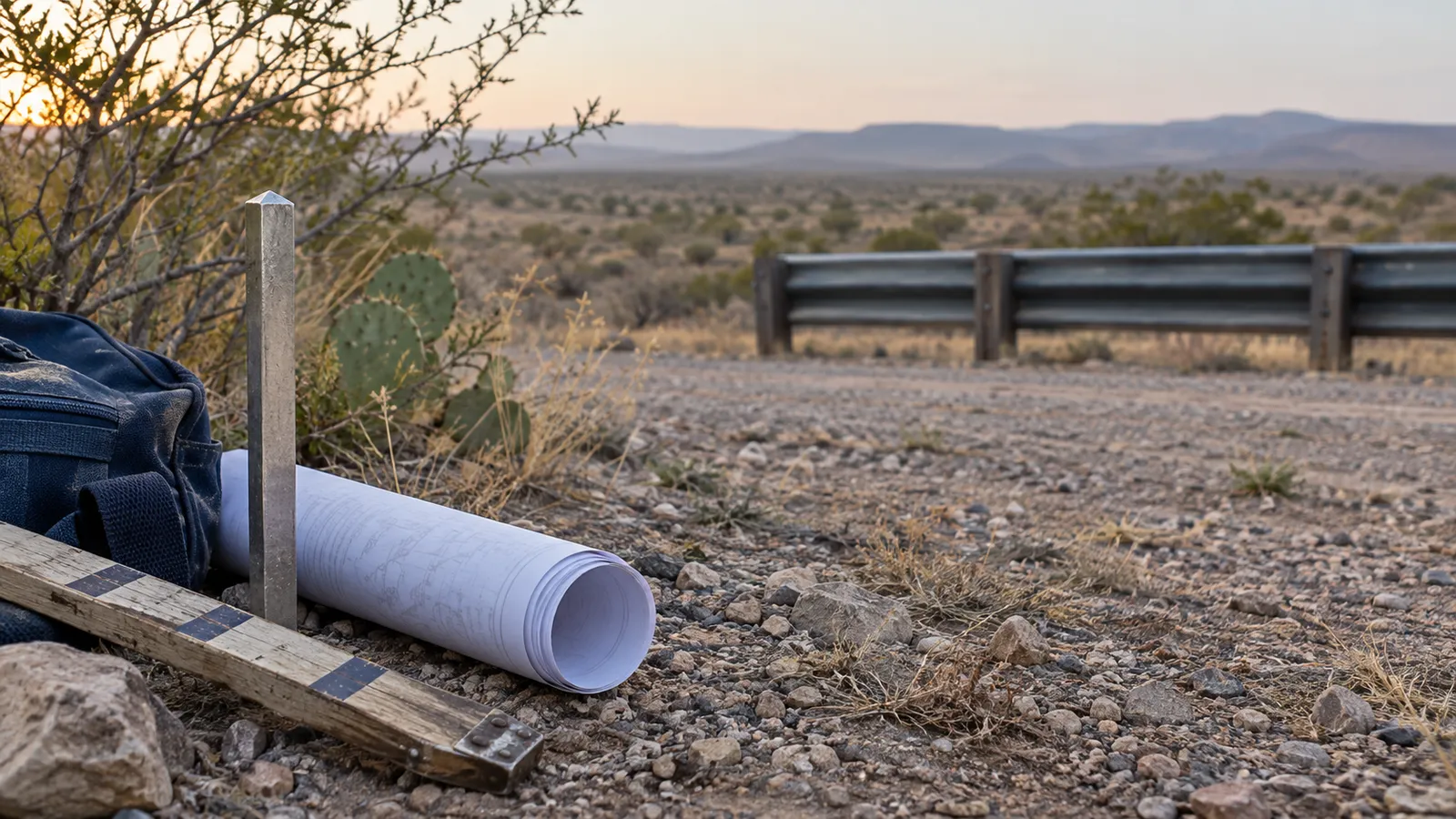
Big Bend is a wide region of West Texas along the Rio Grande, not a single park or a single wall line. In this case, it means the Border Patrol's Big Bend Sector, which includes Big Bend National Park and land along the river in state and private hands. The federal waiver records concern physical barriers and roads as well as access, staging, earthwork, drainage, lighting, cameras and sensors.
So what is the height of the border wall? There is no one accurate height for every piece of infrastructure in the order. The government's emergency application says it planned 30-foot pedestrian barriers in other parts of the sector but disclaimed an intent to build that kind of barrier inside the state or national park. The national-park waiver and Lower Canyons waiver authorize work categories; neither supplies a final public construction design for every location.
The waiver records authorize categories of work rather than a final construction design for every location. That means it is too broad to say the order authorizes a 30-foot wall through Big Bend National Park. The Supreme Court stayed the Cardone injunction in this case; it did not decide the other Big Bend cases or settle what construction may occur on every mile.
| Place or work type | What the current record supports |
|---|---|
| Big Bend Sector | In this case, the Court stayed Judge Cardone's injunction. The order does not resolve other Big Bend cases or establish what construction may proceed throughout the sector. |
| Big Bend National Park | The case and waivers cover work there, but the public sources used here do not identify a final construction plan. |
| 30-foot pedestrian barriers | The government's application says they are planned in other parts of the sector, not in the state or national park. |
| Vehicle barriers, roads and technology | The waivers and the government's application describe these as possible components; location-specific details remain material. |
Why the Big Bend project is in court
The dispute began with the secretary's use of Section 102 waivers. The law lets the secretary act to install additional barriers and roads to deter illegal crossings in areas of high illegal entry, then waive legal requirements the secretary considers necessary for fast construction. The government says the Big Bend Sector meets that standard. Its application cited more than 89,000 apprehensions there between 2021 and 2025, along with drug-seizure figures.
The challengers dispute that reading of the law and the sector's designation. In the preliminary-injunction record, Judge Cardone said the evidence put Big Bend last among southern-border sectors in apprehensions, both in total and per mile, and held the challengers were likely to succeed on their major-questions argument. The Supreme Court did not resolve that factual disagreement in its stay order. It said the district court was very likely unable to reach that statutory claim under the review limits Congress wrote into the waiver law.
That leaves a real distinction between the government's reasons for building and the Court's reason for pausing the injunction. The Court weighed the statutory review limit, the government's border-security interest and the cost of delay against the alleged environmental, recreational and aesthetic harms. It did not turn either side's account of the project into a final merits finding.
- 8-1
- Supreme Court vote to grant the stay
- $500,000
- nearly the daily cost the government said the injunction caused
- 3
- 2026 Big Bend waiver notices cited by the Court
Who funds the money for the wall?
Congress funds the federal border-construction effort; Customs and Border Protection and the Department of Homeland Security carry it out. The Supreme Court's order does not set a project budget or say how much funding is committed to a particular Big Bend location.
The Texas Tribune reported $7.5 billion in awarded contracts for roads, barriers and technology in the area. That is reported context, not a substitute for a project-by-project contract record. A government and municipal lawyer or real estate lawyer can help a local entity or landowner sort out a specific federal notice, access request or property question.
How the Big Bend border-wall case got here
The current order came after months of waivers, construction planning and a preliminary injunction. Its date sequence is also why calling it the end of the lawsuit would be wrong.
DHS publishes the West waiver, 91 FR 7298, for Big Bend Sector construction.
A river guide, environmental nonprofit and Ruidosa church-preservation organization file the federal suit.
DHS publishes the National Park waiver, 91 FR 27969.
DHS publishes the Lower Canyons waiver, 91 FR 46939.
Judge Cardone enters a preliminary injunction halting barrier, road and related construction activity in the Big Bend Sector.
The district court issues its memorandum explaining its preliminary major-questions analysis.
The Supreme Court stays the injunction if the government timely seeks certiorari, subject to the terms stated in its order.
Plaintiffs file ECF 79, saying other claims and cross-motions for summary judgment remain pending and proposing further proceedings.
The government files ECF 80 asking for a prompt merits decision; plaintiffs file ECF 81, an opposed motion to compel narrowed discovery.
What nearby readers should verify next
The order changes the legal status of the injunction, but a general report cannot tell a reader what will happen on a particular road, property or trail. These are useful facts to confirm before relying on a claim about the project.
- Whether the location is in the Big Bend Sector and which waiver or project notice applies to it.
- Whether the stated work is a pedestrian barrier, vehicle barrier, road, lighting, camera, sensor or another supporting feature.
- Whether an agency, contractor, park or local-government notice gives a current date, access restriction or property-specific request.
- Whether Judge Cardone rules on the cross-motions for summary judgment or the motion to compel, or a later Supreme Court action changes the temporary stay.
Big Bend border wall FAQs
Has building the border wall resumed?
The Supreme Court stayed Judge Cardone's injunction in this case. That does not finally decide the lawsuit, resolve the other Big Bend cases or establish what work may proceed at a particular location.
Where is Big Bend?
Big Bend is a large region of West Texas along the Rio Grande. In this case, the Big Bend Sector includes Big Bend National Park and land along the river in state and private hands, so it is broader than the park alone.
Who funds the money for the wall?
Congress funds federal border construction, and DHS and Customs and Border Protection carry it out. Reporting describes contracts in the Big Bend area, but the Supreme Court's order itself does not set a project budget.
What is the height of the border wall?
There is no single height for all Big Bend infrastructure. The government's application says 30-foot pedestrian barriers are planned in other parts of the sector but not inside the state or national park; the project also involves potential vehicle barriers, roads and technology.
Did the Supreme Court rule that the Big Bend border wall is legal?
No. The Court granted a temporary stay of the lower-court injunction and said the district court was very likely barred from deciding the major-questions claim. The order does not finally resolve every claim or establish a final plan for each location.
What is happening in the district court now?
As of the last public docket entry on November 13, the parties' cross-motions for summary judgment remain pending. The government has asked for a prompt merits decision, and the plaintiffs have moved to compel narrowed discovery, including production by November 30.
The next order will matter more than the headline
The Supreme Court's stay changes the status of the Cardone injunction in this case. The Court's order makes its continuation conditional on a timely certiorari petition, but none appeared on the public application docket as of November 15. Meanwhile, the next district-court decision could address the pending cross-motions for summary judgment or the motion to compel. For readers following a location in Big Bend, the most useful next fact is not a broad claim that the wall won or lost. It is the next court order or project notice that identifies what work may occur there. For context on how interim court orders can reshape government action without ending a dispute, see Juricue's guide to 2026 court-power rulings.
Need a lawyer?
Dealing with something like this?
Legal issues like this affect people and businesses differently. A lawyer can explain what it means for you, and we can help you find one in Texas.
Juricue is not a law firm and doesn't give legal advice. Contacting us doesn't create an attorney-client relationship.